The problem with most engagement surveys
Most engagement surveys tell you something is wrong. Few tell you what to do about it.
Annual engagement surveys have become a fixture of organizational life. Most produce a score. Some produce a benchmarked score. A handful produce a ranked list of themes. And then, typically, very little changes — because the data is too general to act on, too infrequent to be current, and too disconnected from the specific people, managers, and teams where the problems actually live.
Leaders are left running broad initiatives against vague findings. HR teams defend survey participation rates while executives question the return on investment. The disengagement the survey was meant to address continues — now with the added frustration of having measured it.
The problem is not that engagement surveys are a bad idea. The problem is that most of them are designed to measure sentiment at scale rather than diagnose problems at the source. Fixing engagement requires knowing which dimension is broken, in which team, and why — not a sitewide average.
What the software does
A diagnostic toolkit — not a single survey
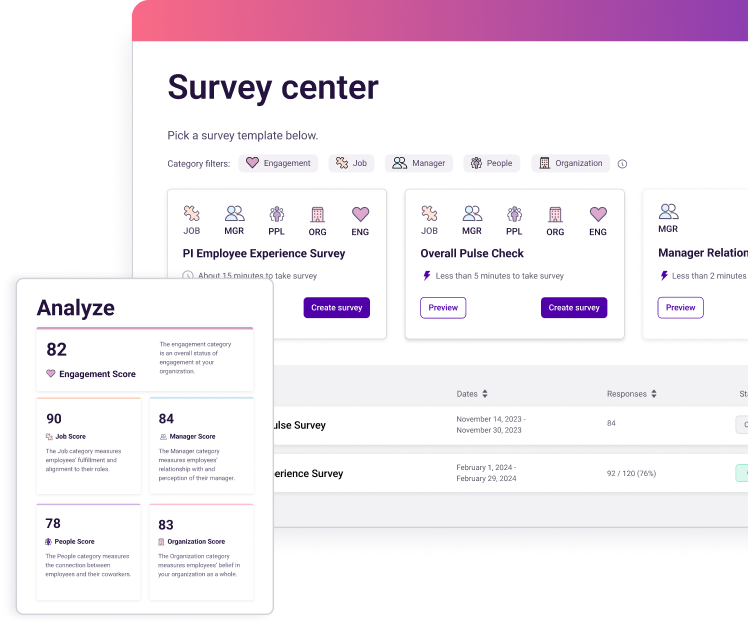
Rather than one annual survey that measures everything generically, this platform gives you seven targeted diagnostic surveys — each designed to answer a specific question about a specific dimension of the employee experience. Run the right survey for the problem you are trying to understand.
Overall engagement pulse
A quick, targeted check on overall engagement sentiment — less than 5 minutes. Run it frequently enough to track trends and catch deterioration before it compounds.
Manager relationship diagnostic
Specifically measures the quality of the manager-employee relationship — the most common driver of disengagement. Identifies where manager effectiveness is a root cause rather than a contributing factor. How behavioral data helps managers →
Job fit and meaningful work
Two targeted surveys that measure whether employees feel their role matches their capabilities and whether their work feels meaningful. Connects directly to role fit data from the hiring assessment module. How role fit is assessed →
Culture health and trust
Organisational-level diagnostics measuring culture health and interpersonal trust — designed for executives and HR leaders who need to understand the cultural conditions affecting performance.
Also includes: Diversity, Equity & Inclusion survey measuring how inclusive employees experience the organisation.
What makes this different
Engagement data connected to behavioral context
Most engagement platforms produce survey data in isolation. This platform sits within the same ecosystem as your hiring assessments and manager insight tools — which means engagement results can be interpreted alongside the behavioral data you already have about your people.
A low manager relationship score is more actionable when you can also see the behavioral dynamic between that manager and their team. A job fit problem is more diagnosable when you have role fit data from the hiring assessment. The engagement survey becomes part of a connected picture rather than a standalone data point.
Connected data
Engagement results sit alongside behavioral profiles, role fit data, and team composition — giving HR leaders a more complete picture than survey scores alone.
Targeted by dimension
Seven surveys across five dimensions mean you measure what matters right now — not everything at once, every time.
Designed for action
Each survey produces data specific enough to act on — by manager, by team, by dimension — rather than organisation-wide averages that obscure where the real problems are.
The process
From survey design to actionable insight
Select the right survey
Choose from seven targeted diagnostic surveys based on what you need to understand — overall engagement, manager effectiveness, culture health, job fit, meaningful work, trust, or inclusion. Each takes between 2 and 15 minutes.
Deploy to your team
Employees receive a survey link. Participation is anonymous. The platform tracks completion and sends reminders automatically.
Review results by dimension and team
Results are broken down by survey dimension, by team, and by department — so you can see exactly where engagement is strong, where it is weak, and what is driving both.
Identify root causes, not just symptoms
The platform connects engagement results to behavioral data — manager profiles, role fit scores, and team composition — giving HR leaders and executives context for what they are seeing in the numbers.
Define your response
Use the diagnostic data to prioritise where to focus, which leaders to work with, and what changes are most likely to move the needle — with evidence to support every decision.
Is this right for you
Is your organisation ready to diagnose engagement properly?
Employee engagement software works best when the organisation is genuinely committed to acting on what the data reveals — not just measuring it. If any of the following applies, this is worth a conversation.
See it live
See the Platform in a Demo Built Around Your Organisation's Context
We walk you through the platform using scenarios relevant to your organisation — not generic examples. Come with a specific engagement challenge or a team you want to understand better.
Walk through the survey selection process and see which diagnostic fits your current challenge
See a sample results dashboard — how data is broken down by dimension, team, and driver
Understand how engagement results connect to behavioral data from the wider platform
Discuss pricing, implementation, and what getting started looks like for your organisation
Common questions
Frequently asked
The case for diagnosing engagement properly
A score is not a diagnosis. Knowing that engagement is low is not the same as knowing why it is low, where it is worst, and what to do about it. Employee engagement software that produces targeted, actionable diagnostic data gives HR leaders and executives the specificity they need to make engagement investment worthwhile.

Founder & Principal Consultant
MSc in I/O Psychology, 13+ years in leadership roles with A.P. Moller Group, now advising global organizations on talent strategy.