The problem with most hiring
Most hiring decisions are made with the wrong information
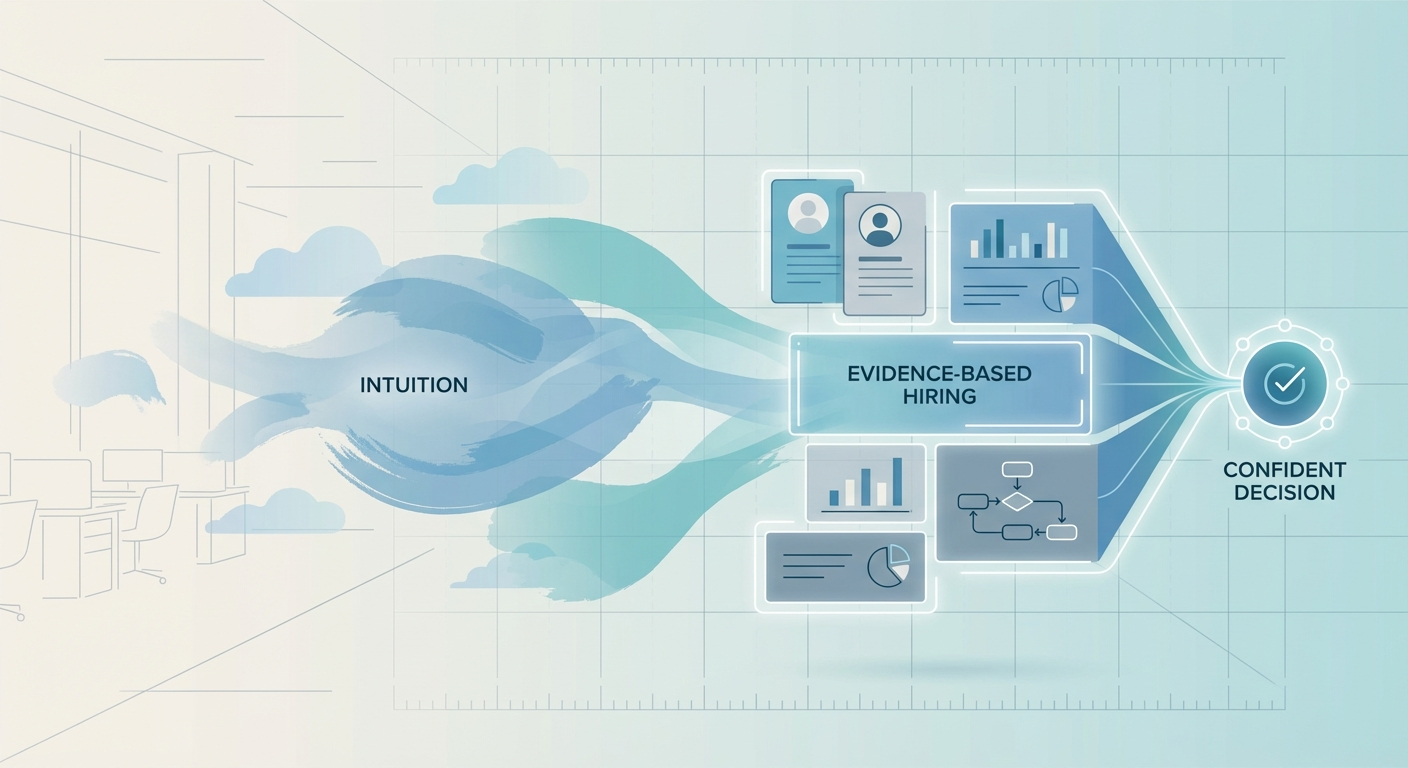
CVs and Unstructured Interviews are the default hiring tools in most organizations. Both are poor predictors of job performance. Unstructured interviews, where each interviewer asks different questions and weighs answers differently, produce results that are barely better than chance.
The problem is not that hiring managers lack judgment. It is that they are working with information that does not reliably connect to how someone will actually perform in the role. Behavioral tendencies, learning speed, and role fit do not show up on a CV.
Structured Behavioral and Cognitive Assessment gives your hiring judgment better material to work with before you meet a single candidate.
What the software does
Four things that change how you hire
A science-backed process for confident hiring decisions, from job brief to offer letter.
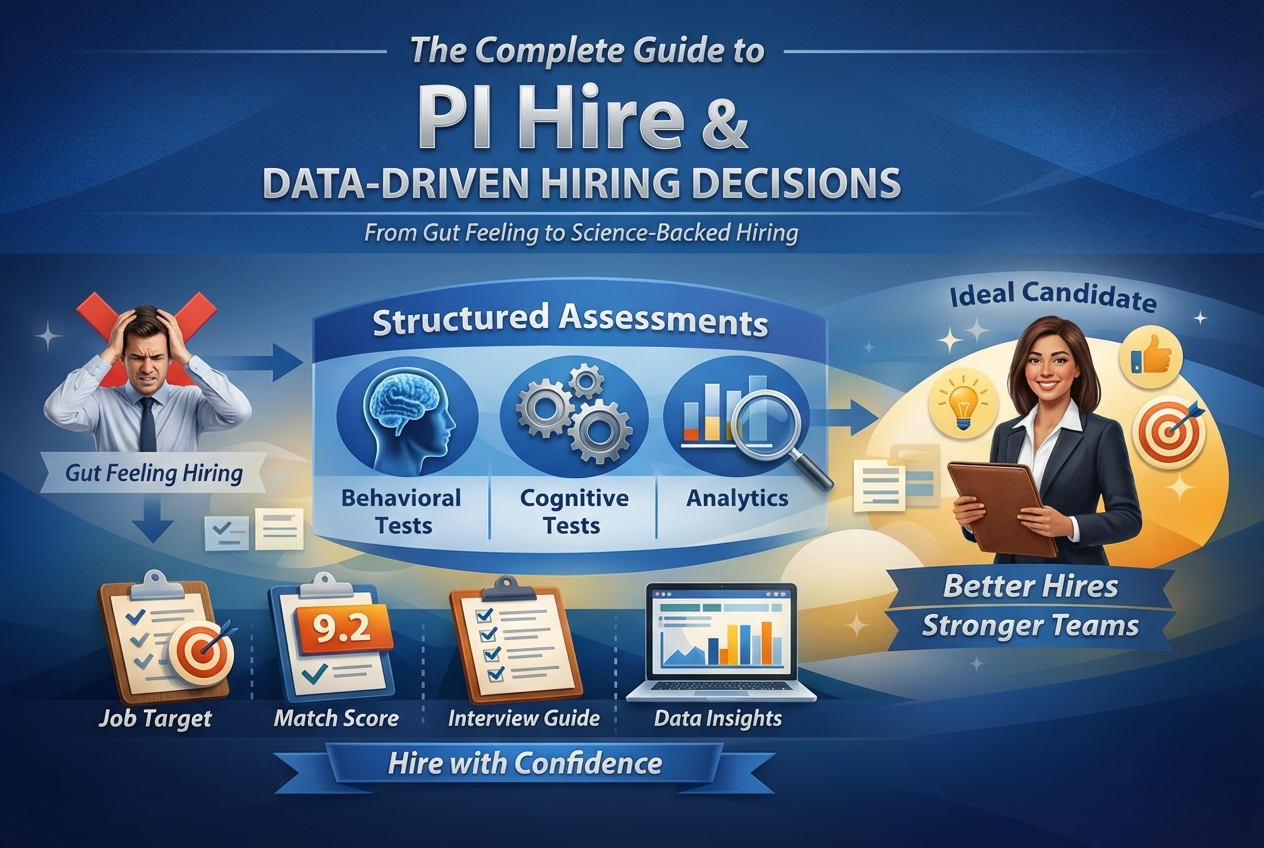
Define job targets clearly
Align stakeholders on behavioral and cognitive requirements before you see a single CV. Takes approximately 15 minutes. Learn more about job targets →
Assess candidates objectively
Scientifically validated assessments — 6 minutes for behavioral and 12 for cognitive — measure how candidates naturally approach work and how fast they absorb new information.
Compare apples to apples
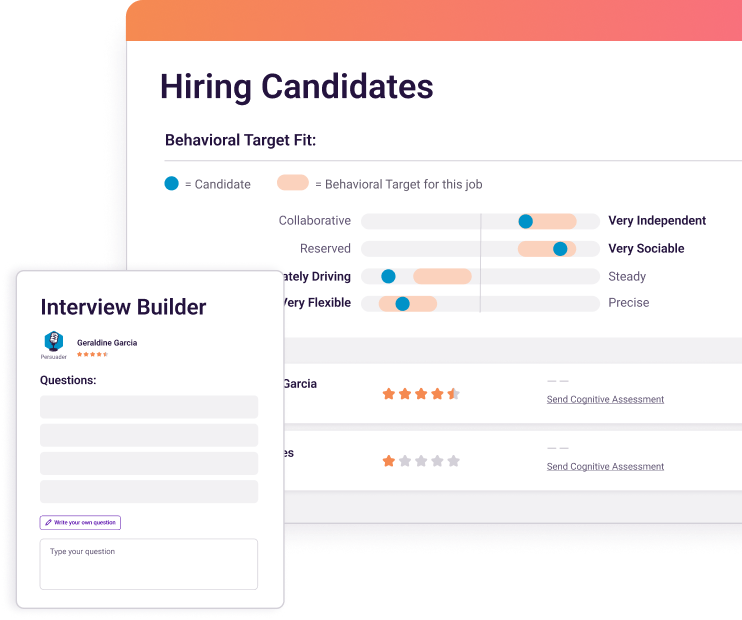
Match each candidate to the job target with clear visual insights. No more guesswork or relying on who presented best.
Run better interviews
Guided interview questions generated from each candidate's behavioral profile. Every interviewer asks the right questions.
From features to real results
The measurable difference structured hiring makes
The measurable impact organizations see with structured hiring assessment.
Faster time-to-hire
Shortlists built on data, not endless rounds of interviews. Candidates who align with the role are easier to identify early.
Better job fit and performance
People step into roles that match how they are wired to work. Early performance conversations are grounded in data, not impressions.
Less turnover in key roles
Reducing the costly cycle of hire-regret-replace starts at the point of selection. Behavioral alignment is a retention input, not just a hiring one.
Is this right for you
Is your organisation ready to hire differently?
This software works for any organisation that makes hiring, promotion, or succession decisions — which is every organisation. The unlimited model means there is no cost penalty for using it across every role, every hire, and every internal assessment. The question is not whether you hire enough to justify it. The question is whether your organisation is ready to use people data seriously.
See it live
See the Platform in a Demo Built Around Your Real Roles
We walk you through the platform using scenarios from your organization — not generic examples. Bring a real role you are hiring for.
Build a sample job target for one of your real roles
Walk through candidate match scores and how to interpret them
See interview guides generated from candidate profiles
Understand pricing and onboarding for your team size
Common questions
Frequently asked
Direct answers to the questions hiring teams ask most.
The case for doing this properly
A hiring process built on interviews alone will produce some good hires. Adding structured behavioral and cognitive assessment gives your judgment better material to work with.


Founder & Principal Consultant
MSc in I/O Psychology, 13+ years in leadership roles with A.P. Moller Group, now advising global organizations on talent strategy.