The Complete Guide to PI Design and Team–Strategy Alignment
Align your team's behavioral strengths to business strategy with data-driven team design. A complete guide to talent optimization through PI Design.

In today's fast-paced environment, aligning your team design with your business strategy isn't just ideal—it's essential. Even a cutting-edge strategy can falter if your people aren't in tune with it. PI Design (Predictive Index Design) is a data-driven approach to bridge this gap, helping leaders intentionally align their teams with their strategy for maximum performance.
It's a core component of talent optimization – the discipline of aligning business and people strategies – turning team-building from an art into a science. This guide will explain what PI Design is, how it works at a high level (covering strategy alignment, team composition, roles and responsibilities, and talent optimization), its benefits, and key use cases for leadership teams, project teams, and new initiatives.
In Brief
PI Design is a data-driven team alignment tool from The Predictive Index that helps leaders match team behavioral strengths to strategic goals. It uses individual PI Behavioral Assessment data to generate a Team Type (one of 9 patterns), then overlays it with a Strategy Type to reveal alignment gaps. This guide covers how PI Design works, its benefits for strategy execution and team cohesion, and core use cases for leadership teams, project teams, and change initiatives. It complements PI Inspire for individual-level management.
Key Takeaways
- PI Design aligns team behavioral data with strategic goals using 9 Team Types and 10 Strategy Types.
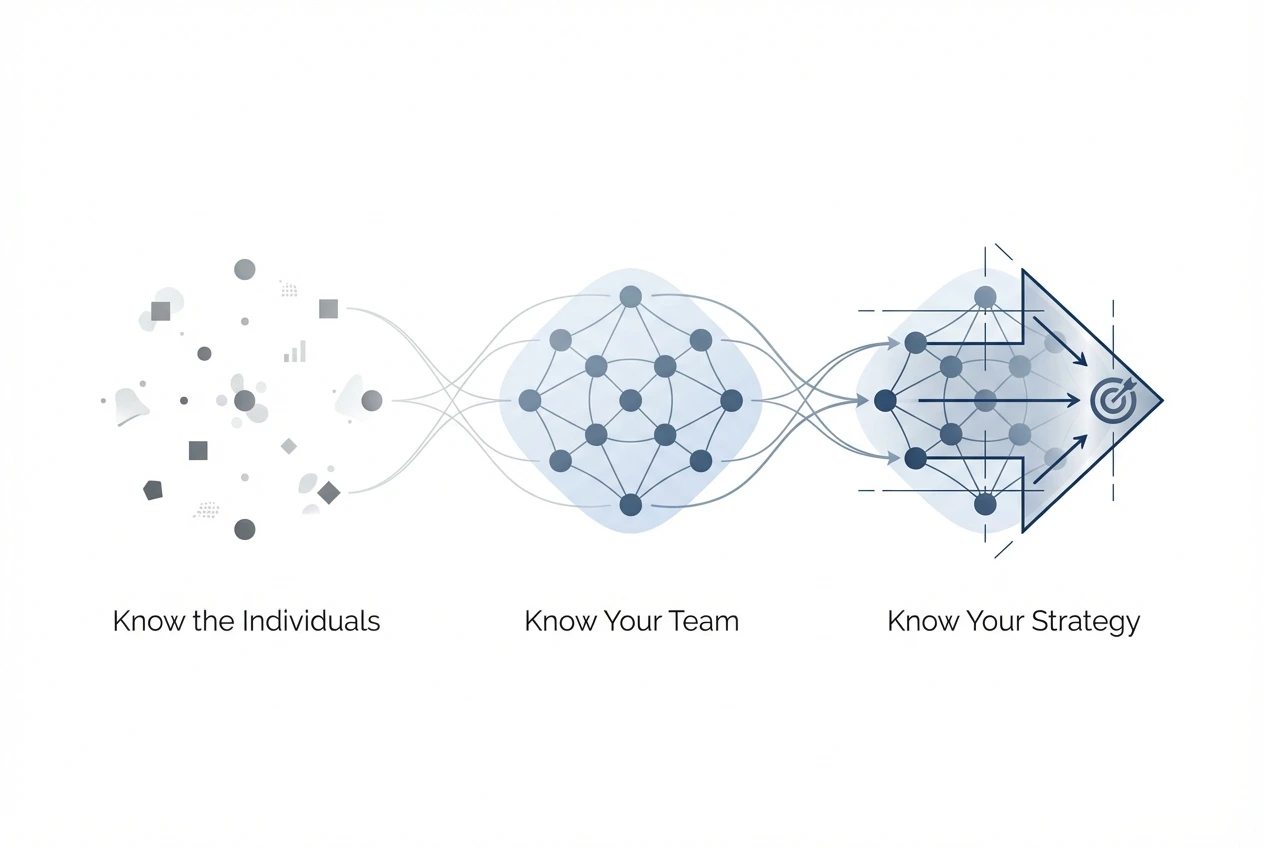
- It works in three phases: Know the Individuals → Know Your Team → Know Your Strategy.
- Teams studied: 22,000+ teams inform the Team Type framework for reliable, research-backed insights.
- Key benefits: better strategy execution, reduced friction, data-driven decisions, and faster adaptation to change.
- Core use cases: leadership teams, project teams, and new initiatives or change efforts.
- PI Design turns team-building from guesswork into a repeatable, science-backed process.
What is PI Design?
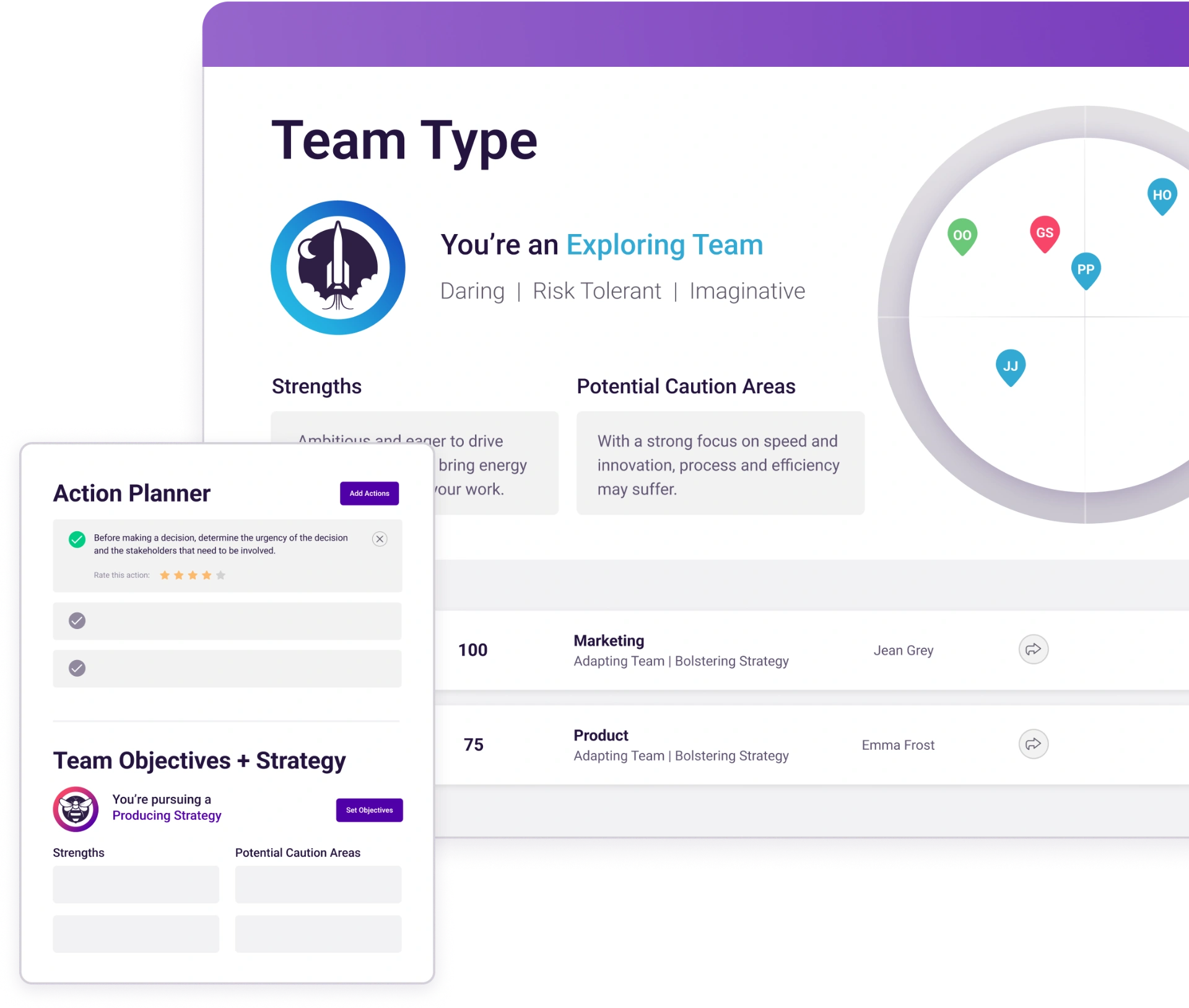
PI Design is a solution and framework from The Predictive Index that enables organizations to build high-performing teams intentionally aligned to their strategic goals. In simple terms, PI Design expands the concept of individual behavioral assessments to the team level. Every person has unique work style drives (e.g. some are detail-oriented, others are big-picture thinkers). PI Design aggregates these individual behavioral patterns to summarize a team's overall working style, known as a Team Type.
Through years of research (over 22,000 teams studied), PI has defined nine distinct Team Types that describe how a given team naturally tends to work – each with its own strengths and potential caution areas.
Where PI Design truly shines is in linking team composition to business strategy. The platform allows you to overlay your team's strategic objective with one of ten defined Strategy Types (common patterns of team goals). By visualizing your Team Type side-by-side with your Strategy Type, you can immediately spot where the team's natural tendencies support the goal and where there are gaps or misalignment.
In other words, PI Design shows you how well-suited your team is to execute a given strategy, and where they may need to stretch or adjust. This is the essence of team–strategy alignment: ensuring the way your people naturally work is in sync with the results you need to achieve.
How PI Design Works (Strategy Alignment in Action)
PI Design makes the process of aligning teams to strategy clear and actionable. It essentially works in three phases, often facilitated through the Team Discovery tool in the PI platform:
Know the Individuals
Team members (and leaders) start by taking the PI Behavioral Assessment™ – a quick, science-based questionnaire that reveals each person's behavioral drives and work style preferences. This helps everyone "know yourself," providing insight into how each individual likes to communicate, make decisions, and approach work.
Know Your Team
Next, PI Design combines those individual results to map out the team's collective behavioral identity. It highlights the team's aggregated strengths and caution areas and identifies the Team Type (a shorthand label for the team's overall working style). This step paints a picture of "how the team approaches its work" as a whole. For example, is your team naturally a bold, risk-taking Exploring Team, or a detail-focused, methodical Stabilizing Team?
Know Your Strategy
Finally, the team's strategic goal or project is defined in PI Design, yielding a Strategy Type that characterizes the work to be done (e.g. an innovation-driven strategy vs. a process-driven strategy). The Team Type is then visualized side-by-side with this Strategy Type, making any misalignments immediately apparent. If the team's natural style doesn't fully match what the strategy demands, PI Design provides instant insights and recommended actions to close the gap.
By following this process, PI Design takes the guesswork out of team design. Rather than assembling teams based on gut feeling or generic team-building exercises, you're using hard data and proven models to ensure the team's makeup and norms align with your goals. As a talent optimization platform, PI Design essentially allows you to predict your team's likelihood of success on a given initiative and then actively improve it with targeted interventions.
The result is a team deliberately crafted to execute on its strategy – in other words, strategy and people working in harmony.
Roles, Responsibilities, and Team Composition
A crucial part of PI Design (and effective team building in general) is clarifying roles and responsibilities in alignment with each person's strengths. High-performing teams don't happen by accident – they are designed. This means ensuring you have the right people in the right roles and that everyone understands how their role contributes to the broader objective.
PI Design helps in this regard by illuminating each team member's natural strengths, communication style, and working preferences, so leaders can assign tasks and responsibilities accordingly.
When each member of a team knows their specific role in achieving the objective, and trusts that their teammates are equally well-suited to their own roles, collaboration becomes much smoother. This clarity reduces overlaps or gaps in responsibilities and minimizes the friction that often occurs when personalities clash or expectations are unclear.
As the Predictive Index team explains, productive teamwork requires that everyone is confident in how their contribution fits into the end goal. By designing a team with complementary strengths and clear responsibilities, PI Design helps optimize talent deployment – each individual is positioned to do what they do best in service of the team's mission.
Additionally, PI Design's insights encourage effective communication and trust. Teams often struggle when members have drastically different work styles (for instance, a big-picture visionary working with a detail-oriented analyst). PI Design surfaces these differences in a non-judgmental way, giving the team a common language to discuss them.
With this awareness, leaders and members can adjust how they interact – establishing the ideal mix of communication styles within the group and building mutual respect for each person's contributions. Over time, this fosters a culture of trust and accountability, as teammates understand not just what each person is doing, but why they approach it the way they do.
In short, aligning roles and responsibilities through PI Design ensures the team's composition is a strategic asset rather than a random assortment of individuals.
Benefits of PI Design
Implementing PI Design offers several concrete benefits for organizations aiming to align their people strategy with their business strategy:

Better Strategy Execution
When teams are intentionally designed to fit the strategy, companies have a much higher chance of achieving their goals. PI Design increases the confidence of leadership teams in their ability to successfully execute the business strategy and deliver results, because the team has the right mix of behavioral strengths for the task at hand. In effect, it ensures you're not trying to, say, execute an innovation strategy with a team that's naturally risk-averse, or vice versa – a known recipe for failure. Aligning Team Type with strategy sets you and your people up for success.
Reduced Friction and Stronger Team Cohesion
Teams designed via PI avoid many common dysfunctions. By aligning people who work well together and clarifying their roles, you reduce organizational friction and prevent toxic work cultures. PI Design gives leaders tools to build trust and boost camaraderie – for example, by revealing how each person prefers to communicate and collaborate, so that team members can adapt and bring out the best in one another. This data-driven understanding eliminates the misunderstandings and miscommunications that often derail teams. The outcome is a more cohesive unit with high levels of trust, where conflicts are minimized and innovation can flourish in a safe environment.
Data-Driven Decisions & Talent Optimization
Perhaps one of the greatest benefits is the elimination of guesswork in team building. PI Design replaces intuition and generic team-building exercises with objective people data and actionable insights. Leaders can make informed decisions about team composition, identify gaps (skill or behavioral gaps), and even get AI-driven recommendations to address those gaps. This contributes to a broader talent optimization strategy – making sure that your talent is configured in the best possible way to achieve your business strategy. Organizations practicing talent optimization report higher engagement and performance because their people strategy is intentionally aligned to business needs. In short, PI Design enables a proactive approach to managing teams, where you can foresee challenges and tackle them before they impact results.
Faster Adaptation and Change Readiness
Because PI Design provides a clear picture of a team's capabilities and gaps, it's extremely useful when change happens – whether it's a new strategic initiative, a shift to remote/hybrid work, or a merger/acquisition. Leaders can quickly visualize how changes will affect team dynamics (e.g. adding new members or new goals) and get guidance on re-aligning the team. For example, during a major culture change or M&A, PI Design acts as a playbook to integrate teams, showing how a combined team's dynamics will look and suggesting actions to improve cohesion in the new reality. This means organizations can navigate change with confidence and maintain performance even in turbulent times.
In summary, PI Design helps build teams that gel and execute. It creates clarity (in strategy, roles, and expectations), boosts confidence (leaders and members know they have the right team structure), and drives results (teams hit their targets more reliably). It's a strategic investment in your people that yields a high-performing culture.
Core Use Cases for PI Design
PI Design can be applied to virtually any team scenario, but there are a few especially high-impact use cases worth highlighting. In each of these, the goal is to ensure team–strategy alignment so that the group can perform at its peak:
Leadership Teams
Your top leaders set the direction for the entire company, so it's critical that they are aligned and working cohesively. PI Design helps senior leadership teams get aligned on strategy, ensuring clarity and consensus on objectives at the highest level. By examining the behavioral styles of each executive and how they mesh, you can predict how well the leadership team will execute the strategy and where disagreements or gaps might arise.
For example, if a leadership team scores as a highly Innovative/Exploring Team Type but the strategy requires careful risk management, that's a flag to address. Using PI Design, leadership teams can make adjustments (redistributing responsibilities, bringing in a different perspective, or consciously mitigating certain biases) so that they speak with one voice and lead the organization effectively. An aligned leadership team means their vision and decisions are cohesive, which cascades down to employees and prevents mixed messages.
Project Teams
Whether it's a cross-functional task force or a short-term project group, project teams benefit greatly from PI Design. These teams are typically assembled to achieve a specific outcome (launch a product, execute a campaign, solve a particular problem) and often disband after completion. PI Design takes the uncertainty out of picking the right people for the project. Instead of guessing who might work well together or who has the needed skills, you can use PI's behavioral insights to assemble a complementary team tailored to the project's goals.
For instance, a project team tasked with a creative new product launch might need a healthy mix of big-picture thinkers and detail-oriented executors – PI Design will highlight if your proposed team has that balance or if you're leaning too much one way. By aligning the team's collective profile with the project's Strategy Type, you set the project team up to hit the ground running and deliver results without the usual storming-phase friction. There's "no more guesswork when deciding who's tackling your next big project… – just pure science."
New Initiatives & Change Efforts
Launching a new initiative (such as entering a new market, adopting a new software system, or transforming a business process) often requires forming a special team or steering committee. PI Design is ideal for these scenarios where the stakes are high and the path is uncharted. A new initiative team might need, for example, strong Exploring tendencies for innovation or Stabilizing tendencies for process implementation – the required team profile depends on the nature of the initiative.
With PI Design, you can define the strategic goal of the initiative and ensure the team driving it has the right makeup. This use case overlaps with both leadership and project teams: sometimes the initiative team is a subset of leadership, other times it's a cross-functional project team. In either case, PI Design provides confidence that you're choosing the best people for the job based on objective data, and that they will function as a unified force. New initiatives often have high uncertainty; PI Design reduces one big unknown (team dynamics) by making sure the team's natural strengths align with what the initiative demands. This dramatically improves the chances of success for strategic projects and change efforts.
Aside from these core use cases, PI Design is versatile. It can help nip toxic team cultures in the bud by reshuffling teams or addressing misalignments that cause friction. It supports remote or hybrid teams by giving insight into how to keep distributed team members engaged and communicating well. It's useful in succession planning (designing teams for the future as personnel changes) and in mergers & acquisitions (blending different team cultures). In short, any scenario where a group of people must come together to achieve a goal is a scenario where PI Design can add value.
Conclusion and Next Steps
PI Design provides a complete framework for achieving team–strategy alignment. Rather than leaving team success to chance, it empowers you to design success from the start – aligning the right mix of personalities, defining clear roles, and ensuring everyone is rowing in the same direction toward your strategic goals.
Companies that embrace this approach see more confident leadership, more cohesive teams, and better business results, because they are leveraging the full potential of their talent in pursuit of their strategy.
If you're ready to turn your teams into a competitive advantage, consider making PI Design a part of your strategy and people toolkit. It is the main hub of learning and action for aligning strategy with talent. Don't leave your team dynamics to chance – use PI Design to ensure your teams are built to win, from the executive suite to the project trenches.
As we've shown in this guide, when you align your team design with your strategy, you set your people and your business up for extraordinary success.
Featured Snippets
What is PI Design?
PI Design is a team design and strategy alignment tool by The Predictive Index. It maps team members' behavioral data to organizational goals, helping leaders build teams that are structured and supported to succeed.
What is team–strategy alignment?
Team–strategy alignment means ensuring a team's collective strengths and communication styles are matched to the goals it's meant to achieve. PI Design visualises this alignment and recommends changes to improve performance.
How does PI Design support business strategy?
PI Design uses behavioral assessments to identify how well a team's natural strengths support business objectives. It highlights gaps and provides action plans to close them, improving strategic execution.
What is a Team Type in PI?
A Team Type is a behavioral profile representing how a team prefers to work. It's based on the combined PI Behavioral Assessment results and is used to assess how a team aligns with strategy.
How does behavioral data help in team building?
Behavioral data reveals individuals' workplace drives and communication styles. When used in team design, it helps leaders assign roles, reduce conflict, and ensure strengths align with team goals.
Frequently Asked Questions
What is PI Design?
PI Design is a team alignment tool within The Predictive Index platform. It helps managers and leaders map behavioral data against business strategy to ensure teams are structured and supported to achieve specific goals. It includes assessments, team profiles, strategy alignment tools, and action plans.
How does PI Design help align teams with strategy?
PI Design lets teams define strategic priorities and compare them with their behavioral strengths. If gaps appear—like needing more innovation or process orientation—it offers clear, science-backed steps to improve alignment through roles, responsibilities, and coaching.
What is a Team Type in PI Design?
A Team Type is the collective behavioral identity of a group, based on individual PI Behavioral Assessment results. It helps predict how the team will approach work, collaborate, and respond to challenges—crucial when aligning to strategy.
Is PI Design suitable for all teams?
Yes. Whether it's an executive team, project team, or new initiative, PI Design works across functions. It's especially helpful when goals shift, new members join, or leaders need to improve collaboration and accountability.
What assessments does PI Design use?
PI Design primarily uses the PI Behavioral Assessment. This 6-minute science-backed tool reveals individual workplace drives and needs. The data then informs team mapping, communication strategies, and alignment actions.
What are common outcomes of using PI Design?
Organizations using PI Design often report improved team cohesion, faster project execution, clearer roles, and better strategy execution. It reduces internal friction and gives leaders clarity on how to deploy their people effectively.
Written by

Founder & Principal Consultant
MSc in I/O Psychology, 13+ years in leadership roles with A.P. Moller Group, now advising global organizations on talent strategy.
Progressica is a global talent assessment provider delivering scientifically validated talent assessments and hiring assessments to organizations worldwide. As the licensed partner of The Predictive Index®, a global leader in talent optimization, Progressica enables businesses to make data-driven hiring decisions, improve workforce performance, and align people strategy with business goals. We provide talent assessment solutions to clients across Malta, Italy, the Netherlands, Germany, Belgium, Latvia, Lithuania, Estonia, Saudi Arabia, the UAE, Singapore, Indonesia, Malaysia, Pakistan, and other international markets, supporting effective recruitment, leadership development, and long-term talent optimization.