The Complete Guide to PI Inspire and People Analytics for Managers
Practical manager tools—not HR dashboards. Learn how to use behavioral insights for better 1:1s, coaching, and team relationships.

Managers don't usually struggle because they don't care. They struggle because the "people part" of the job is vague.
You're expected to motivate different personalities, handle conflict, coach performance, and build trust — often with little more than instinct, a few past experiences, and whatever management habits you inherited from your last boss. The result is predictable: uneven 1:1s, feedback that doesn't land, avoidable friction, and development plans that look good on paper but don't change behavior.
That's where people analytics for managers becomes helpful — not dashboards and buzzwords, but actually usable people data. PI Inspire is built for that: it turns PI Behavioral Assessment results into practical tools managers can use to understand colleagues, improve working relationships, and coach with more consistency.
In Brief
PI Inspire is a leadership development tool that translates PI Behavioral Assessment results into practical manager tools—including Reference Profiles (shared language for 17 behavioral patterns), Relationship Guides (side-by-side comparison for better 1:1s), and coaching tools for development conversations. This guide provides a 30/60/90 day workflow for building these practices into everyday management, along with common use cases and responsible-use guardrails. It complements PI Design for team-level alignment.
Key Takeaways
- PI Inspire turns behavioral assessment data into practical tools for managers—not HR dashboards.
- Reference Profiles provide a shared language (17 profiles) for understanding and discussing workplace behavior.
- Relationship Guides compare two people's behavioral patterns to surface strengths, cautions, and collaboration tips.
- The Management Strategy Guide and Coaching Guide help managers adapt their approach without lowering standards.
- A simple 30/60/90 day workflow builds behavioral insight into 1:1s, feedback, and development routines.
- Behavioral insights should be treated as hypotheses to explore—not verdicts to declare.
What you'll learn
- What PI Inspire is and what tools it includes (in PI-accurate terms)
- How managers use Reference Profiles, Relationship Guides, and coaching tools in everyday situations
- A simple workflow to build better 1:1s, feedback, and development routines — without guesswork
Exploring PI Inspire for your organization?
Start hereWhy managers need "people analytics" (even if you hate the term)
Let's demystify the phrase.
People analytics is essentially: using people-related data to solve business problems. That data might come from HR systems, surveys, or other sources — and the point is to support better decisions, not to create pretty charts.
For managers, the "business problems" are often very human:
- •"Why does feedback work with one person but backfire with another?"
- •"Why is collaboration harder between these two colleagues?"
- •"Why does this high performer look fine… but feels one bad week away from quitting?"
- •"How do I adapt my management style without becoming inauthentic?"
The reason instinct fails here is not because you're a bad judge of character. It's because:
- • We all have blind spots.
- • We're inconsistent under pressure.
- • We overgeneralise from a few memorable experiences.
- • Good management gets easier when you have shared language and repeatable tools.
That's exactly the lane PI Inspire sits in.
What PI Inspire is (and what it isn't)
PI Inspire in one sentence:
PI Inspire is a leadership development tool that helps you understand colleagues and improve working relationships using behavioral data.
The data it uses: PI Behavioral Assessment results
At the centre is the PI Behavioral Assessment — an untimed, stimulus-response assessment that measures a person's natural behavioral drives and needs.
What the PI Behavioral Assessment measures
PI describes the Behavioral Assessment as measuring four behavioral drives:
- Dominance
- Extraversion
- Patience
- Formality
Once completed, results are interpreted as a behavioral pattern and the person is assigned a Reference Profile (one of 17).
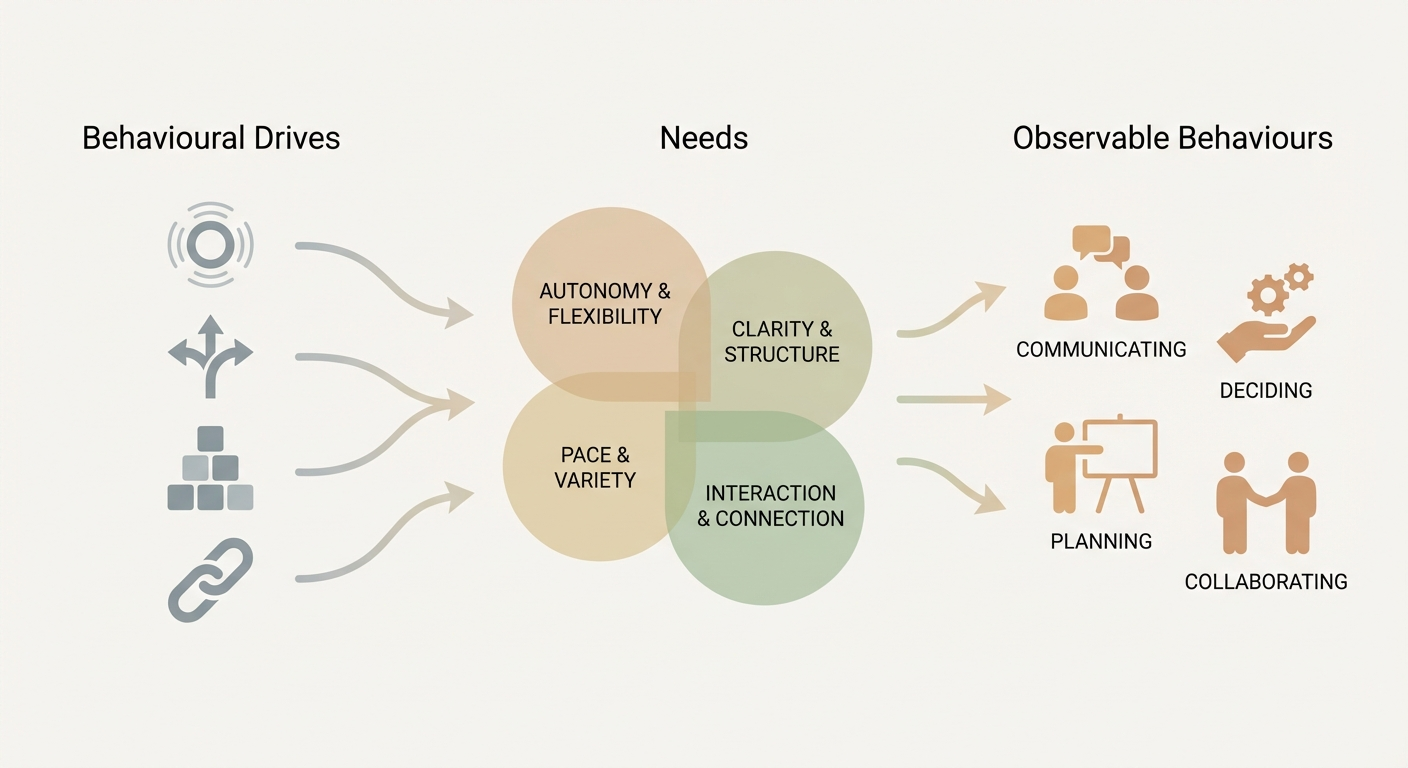
Drives → Needs → Observable behaviors
Why "behavioral" data helps managers (and what it cannot do)
Behavioral data is most useful when it helps you answer practical questions like:
- •What motivates this person?
- •How do they prefer to communicate?
- •What might they find draining or frustrating?
- •Where are they likely to overuse a strength?
What it doesn't do:
- • It doesn't measure values, integrity, or competence.
- • It doesn't guarantee performance.
- • It shouldn't override context (role clarity, workload, incentives, team norms).
This is why the strongest approach is insight + conversation, not insight instead of conversation — a theme that shows up across evidence reviews on effective people management.
The right mindset: insight, not labels
A useful rule for managers: Treat behavioral insights as a hypothesis to explore, not a verdict to declare. That shift alone makes your conversations safer, more respectful, and more accurate.
Reference Profiles: a shared language for day-to-day management
What a Reference Profile is:
PI's science team identified 17 Reference Profiles after analysing millions of Behavioral Assessments. They're designed as easy-to-reference groupings that make results easier to understand and discuss.
Think of a Reference Profile as a workplace persona: it helps a manager quickly grasp what someone needs to do their best work, and where friction might show up under stress.
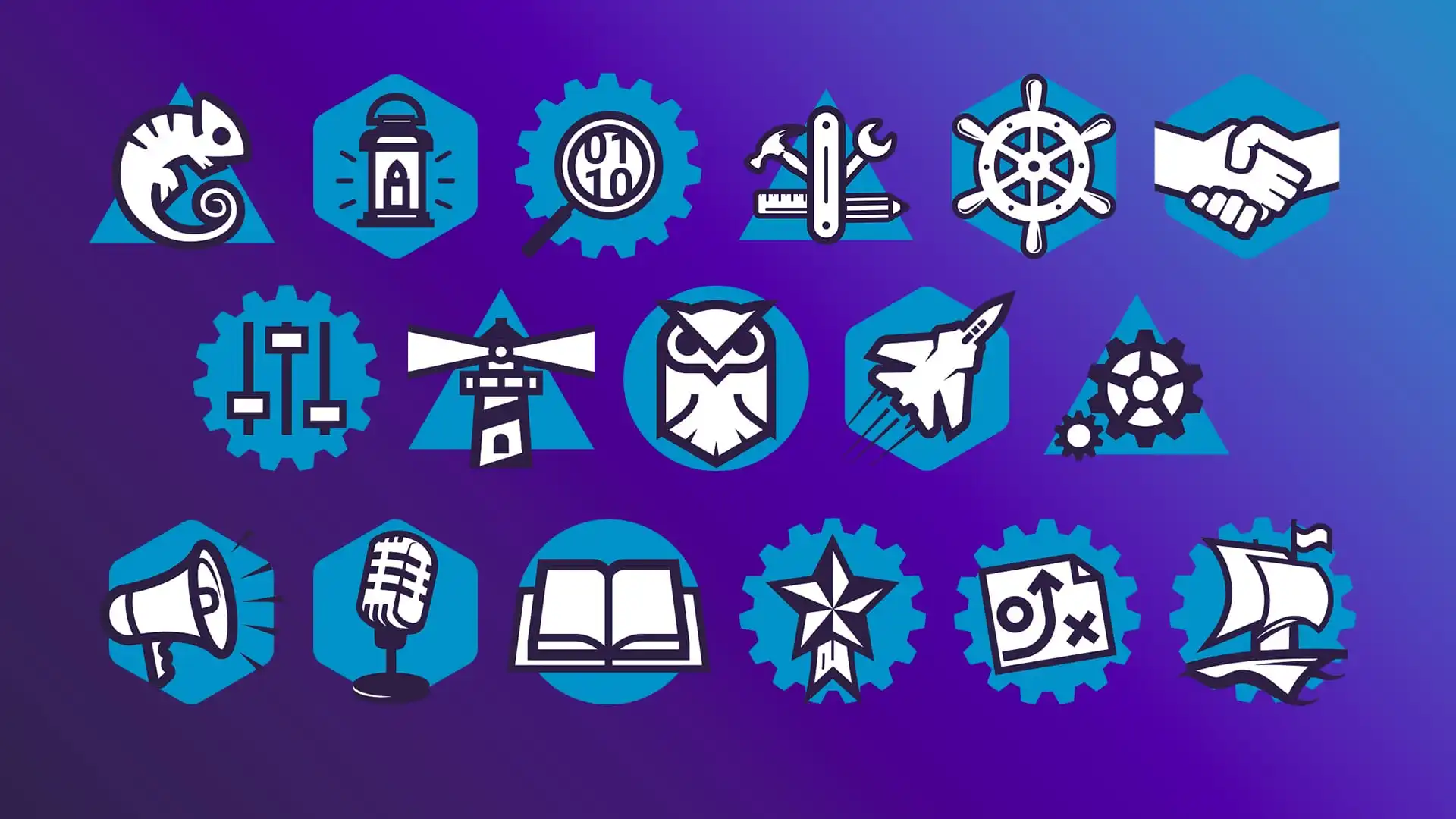
The 17 Reference Profiles provide a shared vocabulary for discussing behavior at work
How managers should use Reference Profiles responsibly
Reference Profiles work best as:
- • A starting point for a 1:1 conversation ("Does this resonate?")
- • A way to prepare for onboarding or role changes
- • A tool to build empathy ("How might this land for them?")
They work poorly when:
- • Managers use them to justify fixed assumptions ("That's just who they are.")
- • Teams turn them into identity labels or banter
- • They become a substitute for expectations and accountability
Common pitfalls (and how to avoid them)
Relationship Guides: better 1:1s, fewer misunderstandings
What the PI Relationship Guide shows:
PI describes the Relationship Guide as a way to compare two employees' behavioral patterns side by side, highlighting strengths, cautions, and tips to help them work well together.
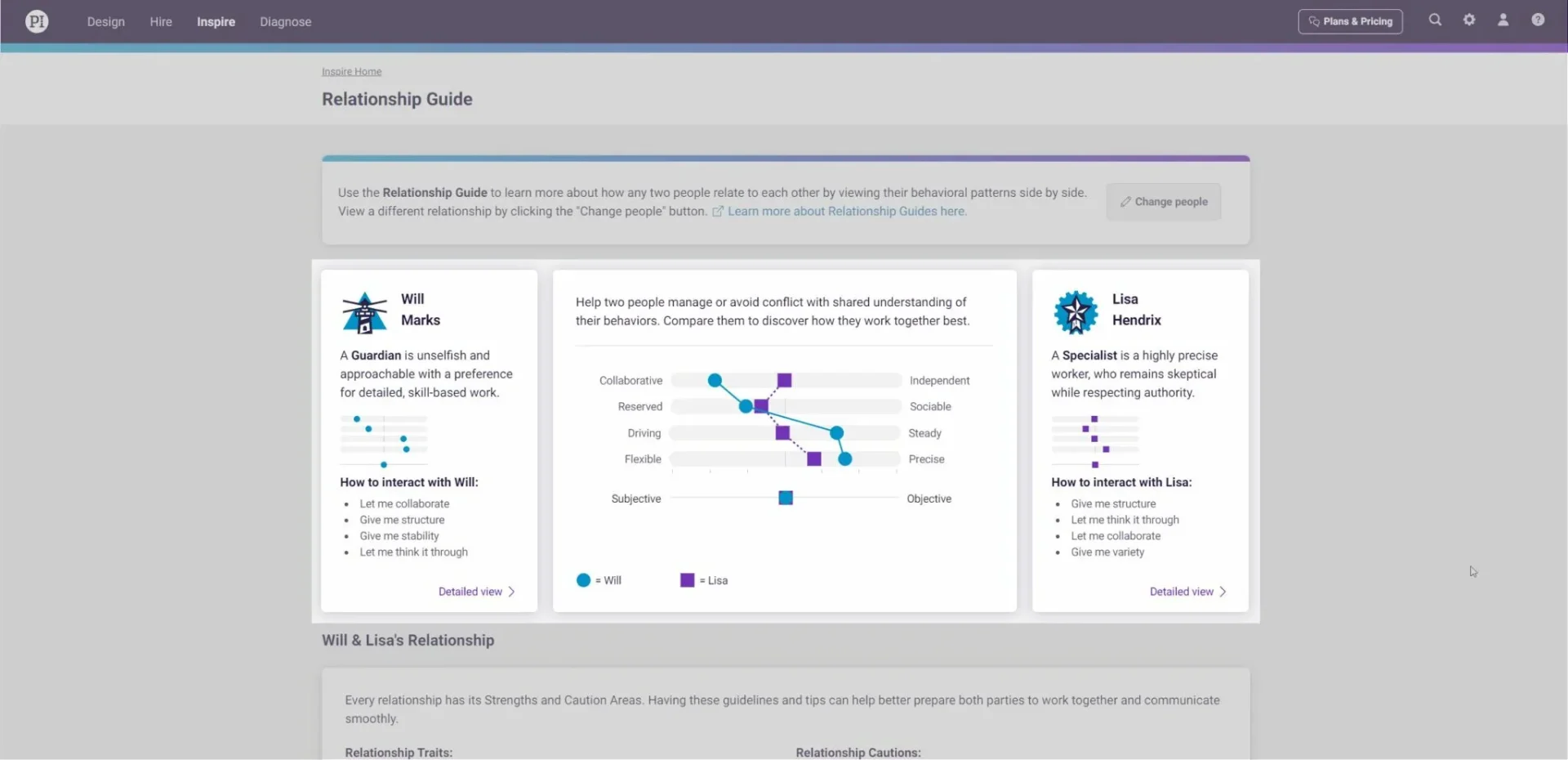
Relationship Guide: strengths, cautions, and collaboration tips
Five ideas of times to run a Relationship Guide
- 1You + a new direct report (set the tone early)
- 2You + someone you struggle to communicate with (reduce friction)
- 3Two peers who need to collaborate frequently (prevent recurring conflict)
- 4A manager + a high performer (support without smothering)
- 5Before delivering tough feedback (choose the right approach)
How to turn insights into real agreements
The Relationship Guide becomes powerful when you turn it into "working agreements", for example:
- • How we'll communicate updates (detail vs brevity)
- • What "urgent" means to each of us
- • How we'll handle disagreement
- • What each of us needs during high-pressure weeks
This is where "people analytics" becomes real: not numbers, but repeatable improvements to how work gets done.
Management Strategy Guide: how to manage and motivate each direct report
What it is and when to use it
PI's Management Strategy Guide is explicitly positioned as a tool to help you understand how to manage and motivate direct reports, based on behavioral data.
It's especially useful when:
- • You inherit a team
- • A new hire joins
- • You're preparing for 1:1s or performance conversations
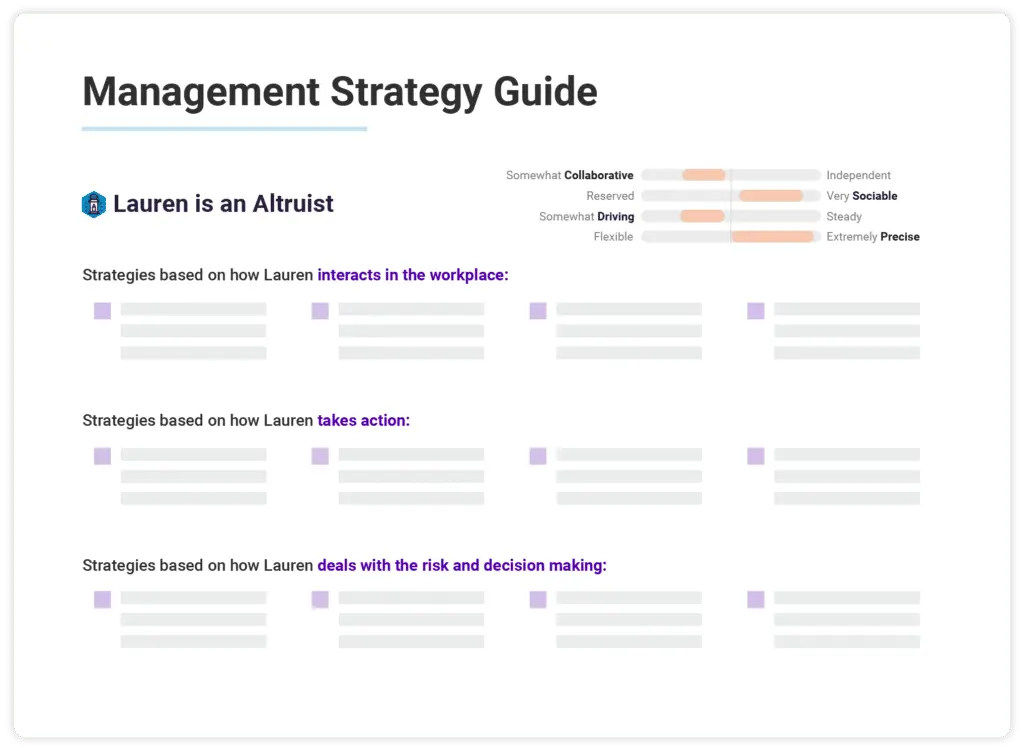
Before the 1:1: a quick preparation checklist
A simple 10-minute setup before your next 1:1
- 1Review your direct report's behavioral insights
- 2Generate/read the Management Strategy Guide
- 3Pick one adjustment to try this week (don't change everything at once)
- 4Use it as a conversation starter: "Here's what I think helps — how does this land for you?"
Examples of what managers adapt (without lowering standards)
Communication
direct vs contextual, written vs spoken
Structure
autonomy vs clarity of process
Recognition
public vs private, frequent vs occasional
Pace
quick iteration vs time to deliberate
Evidence on effective people managers consistently points to the importance of adapting practices while keeping clarity and fairness.
Coaching Guide + coaching tips: developing people without guessing
Coaching as a manager skill (what the evidence says)
There's solid evidence that workplace coaching is associated with positive outcomes, and research continues to refine what "good coaching" looks like in practice.
Google's Project Oxygen research famously included "Be a good coach" as a core behavior of effective managers.
Using PI Inspire's coaching tools
PI's enablement materials describe a Coaching Guide within Inspire and position it as a way to equip employees with behavioral insights for development and future roles.
An especially helpful framing (also echoed in PI's coaching education content) is coaching around the relationship between someone's behavioral drives, and the behaviors required for success in the role. That gives you a way to coach growth without suggesting someone is "wrong" — it's about fit between role expectations and how effort shows up.
Everyday coaching moments (not just "career chats")
Coaching isn't only "Where do you see yourself in 5 years?" It shows up when:
- • You debrief a client call
- • You plan how they'll approach a stakeholder
- • You reflect on how their work was received
- • You help them pace themselves before burnout
Done well, coaching creates the conditions for performance feedback to be useful — and evidence reviews on feedback stress that effectiveness depends heavily on how feedback is delivered and used.
A practical manager workflow (30/60/90 days)
This is a simple way to roll PI Inspire into real management habits.
W1Week 1: Self-awareness + key Relationship Guides
- • Review your own behavioral insights first (so you don't manage from blind spots)
- • Run Relationship Guides for you + each direct report (start with the highest-friction relationships)
- • Pick one relationship agreement to implement immediately (e.g., meeting prep, decision style)
2-4Weeks 2–4: Establish a 1:1 rhythm
- • Set a consistent 1:1 cadence
- • Use prompts from management tips/guides to keep 1:1s focused
- • Keep notes on what works (small experiments beat big overhauls)
2-3Month 2–3: Development goals + team norms
- • Use coaching tools to structure development conversations
- • Align on "What great looks like" in the role
- • Identify stretch opportunities
- • Clarify the support the person needs (and what they don't)
Common manager use cases (without job-function stereotypes)
Onboarding a new hire
Use behavioral insights to discuss communication preferences, feedback preferences, what "good week" vs "bad week" patterns look like — and run the Relationship Guide early to prevent avoidable misunderstandings.
Resetting a struggling relationship
When there's friction, Relationship Guides help you move from "who's right?" to "what's happening between us?"
Giving feedback that lands
Evidence reviews on feedback emphasise that usefulness depends on timing, clarity, and the recipient's ability to act on it. Behavioral insight helps you tailor the delivery without diluting the message.
Helping a high performer avoid burnout
Often the work isn't the issue — it's pace, control, or a mismatch between what energises them and what the role demands over time. Use coaching tools to create a sustainable plan.
Supporting cross-functional collaboration
Relationship Guides are just as valuable for peer-to-peer working relationships as they are for manager-report pairs.
Preparing someone for a next role
Coaching tools can help structure a "future role" conversation around behavioral stretch, learning goals, and support — without turning it into vague encouragement.
Responsible use and basic compliance considerations
This isn't legal advice — just common-sense governance that reduces risk.
Practical Guardrails
Privacy & Access
Be clear with employees about purpose and usage. Avoid sharing detailed results casually or publicly.
Fairness & Consistency
Don't allow behavioral insight to become a "vibes-based" management tool. Keep clear role expectations, consistent performance standards, and documented decisions.
Human Accountability
The tool can support better judgement. It can't replace responsibility for good judgement.
People data is sensitive. The CIPD notes the importance of appropriate data practices and transparency in people analytics.
Working with a Certified Predictive Index Partner (why it matters)
Most organizations don't fail with PI because the data is unclear. They fail because:
- • Managers don't build habits
- • Adoption is inconsistent
- • Teams don't share a common language
PI itself explicitly encourages working with a PI Partner for best practices and rollout.
A strong partner-led approach typically includes:
- • Manager enablement (not just tool training)
- • Playbooks for 1:1s, onboarding, conflict, coaching
- • Light governance so usage stays consistent and respectful
If you want PI Inspire to become a manager habit (not a one-time workshop):
Explore PI Inspire with ProgressicaFAQ
1) What is PI Inspire?
PI Inspire is a leadership development tool that helps employees and managers use behavioral data to build self-awareness, improve working relationships, and support development conversations. It organizes tools like Reference Profiles, Relationship Guides, and coaching-focused guides inside the PI platform.
2) What does PI Inspire use from the PI Behavioral Assessment?
It uses PI Behavioral Assessment results — which measure a person's natural behavioral drives and needs — and translates them into practical outputs such as behavioral insights, Reference Profiles, and relationship-focused guidance.
3) What is a Reference Profile?
A Reference Profile is one of 17 PI profiles that provide an easy-to-reference description of a person's Behavioral Assessment pattern. They're designed to make results easier to understand and discuss in the workplace.
4) What is the Relationship Guide used for?
The Relationship Guide compares two employees' behavioral patterns and provides strengths, cautions, and tips to help them work well together. It's commonly used for manager-report 1:1s, collaboration, and conflict reduction.
5) How should managers use behavioral insights without stereotyping?
Use insights as hypotheses, not labels. Pair them with real performance evidence, invite the employee to validate what resonates, and focus on specific behaviors in specific situations. Evidence-based management emphasises avoiding overreliance on anecdotes and building repeatable, fair practices.
6) Is PI Inspire "people analytics", and do I need a dashboard?
People analytics is about analysing people data to solve business problems. PI Inspire isn't mainly a metrics dashboard — it's behavioral insight and manager tools you can apply directly in 1:1s, coaching, and relationship management.
Final takeaway + next step
If you want managers to be more consistent, empathetic, and effective, the unlock is rarely "try harder". It's giving them shared language + repeatable tools.
PI Inspire does exactly that: it turns behavioral data into practical guidance for relationships, coaching, and everyday people decisions — the kind managers can actually use, even on busy weeks.
Written by

Founder & Principal Consultant
MSc in I/O Psychology, 13+ years in leadership roles with A.P. Moller Group, now advising global organizations on talent strategy.
Progressica is a global talent assessment provider delivering scientifically validated talent assessments and hiring assessments to organizations worldwide. As the licensed partner of The Predictive Index®, a global leader in talent optimization, Progressica enables businesses to make data-driven hiring decisions, improve workforce performance, and align people strategy with business goals. We provide talent assessment solutions to clients across Malta, Italy, the Netherlands, Germany, Belgium, Latvia, Lithuania, Estonia, Saudi Arabia, the UAE, Singapore, Indonesia, Malaysia, Pakistan, and other international markets, supporting effective recruitment, leadership development, and long-term talent optimization.