When and Where Data-Driven Hiring Makes a Difference
Use cases showing where PI Hire delivers the fastest, most measurable ROI—with scalable rigor that matches role risk and hiring volume.
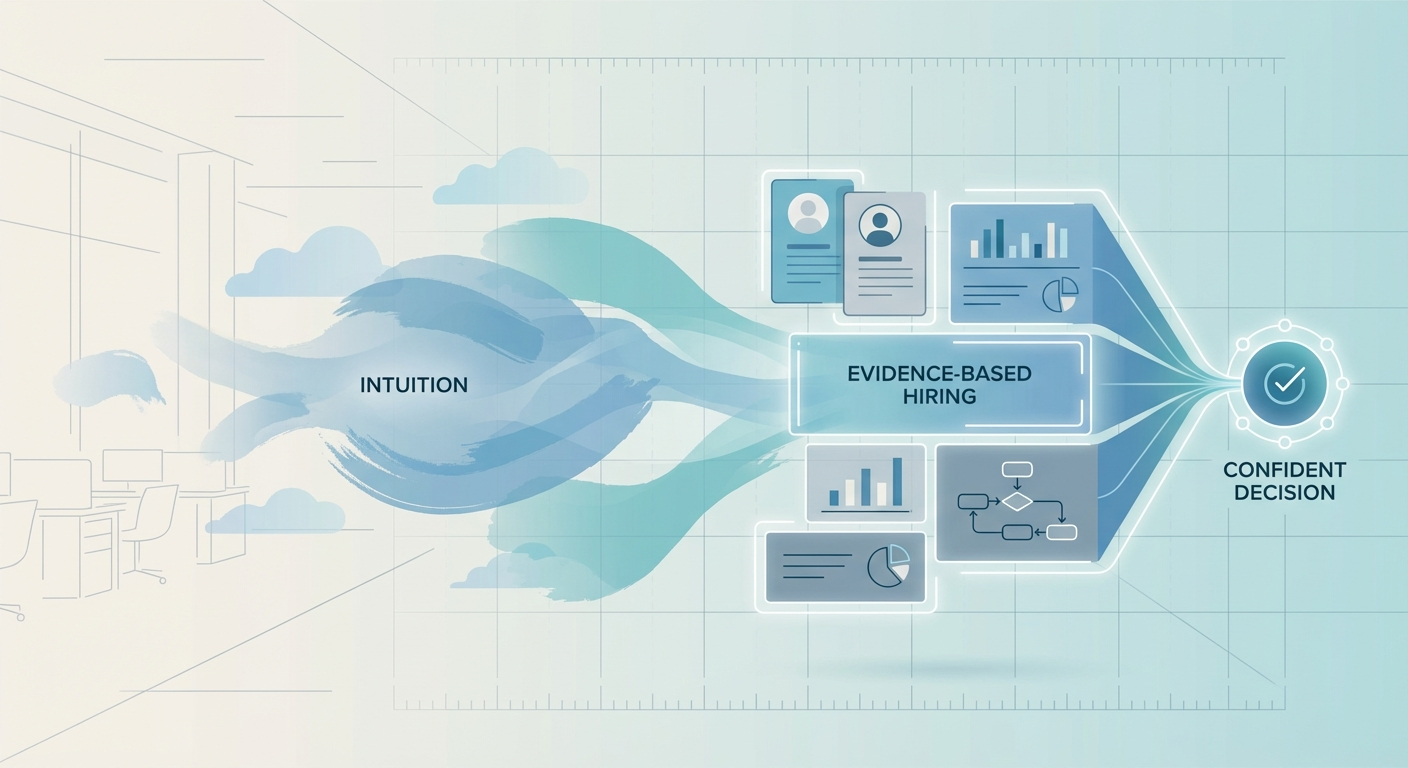
Hiring mistakes are expensive. They slow teams down, increase turnover, and create downstream performance issues that impact managers, customers, and revenue. Yet many organizations still rely heavily on CV pattern-matching and unstructured interviews—methods that feel familiar, but often fail to predict on-the-job success. Understanding why data-driven hiring matters is essential.
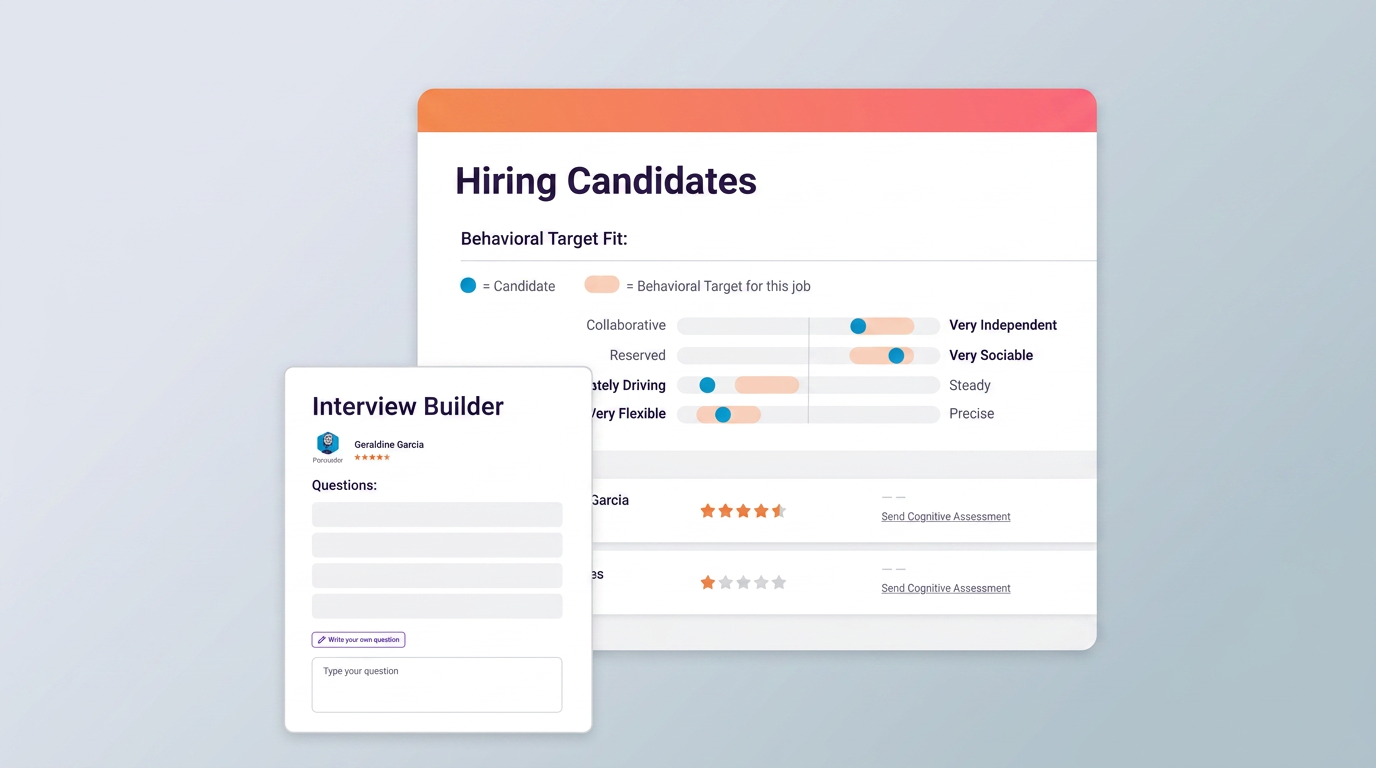
That is where data-driven hiring makes the difference. That is where data-driven hiring makes the difference. With PI Hire—powered by behavioral and cognitive insights—organizations can define what "good" looks like for a role, screen consistently, and interview with structure instead of guesswork. The question is not whether the approach works; it is where it delivers the fastest, most measurable ROI. The use cases below show when PI Hire makes the biggest difference, and when a lighter-touch approach is sufficient.—powered by behavioral and cognitive insights—organizations can define what "good" looks like for a role, screen consistently, and interview with structure instead of guesswork. The question is not whether the approach works; it is where it delivers the fastest, most measurable ROI. The use cases below show when PI Hire makes the biggest difference, and when a lighter-touch approach is sufficient.
In Brief
PI Hire delivers the fastest ROI in high-volume hiring (where consistency is paramount), sales and leadership roles (where bad hires are most expensive), and campus recruiting (where work history is minimal). For technical and creative roles, behavioral data complements skill assessments by improving team fit. Low-stakes or temporary positions may warrant a lighter-touch process, but the tool scales from intern to CEO.
Key Takeaways
- High-volume hiring benefits most from data-driven methods—assessments filter efficiently and reduce 90-day attrition.
- Sales and leadership roles carry the highest cost of a bad hire; behavioral alignment drives faster ramp-up and better retention.
- Campus and entry-level hiring relies on assessments because thin CVs can't reveal potential; this also helps reduce pedigree bias.
- Technical and creative roles still need skill evaluation, but behavioral data helps with team balance and cultural fit.
- Scalable rigor is key—apply the right level of assessment for the risk and complexity of the role, not a one-size-fits-all approach.
You might be wondering, "This sounds great for some roles, but is it necessary for every hire?" Let's explore a few scenarios where PI Hire and data-driven methods particularly shine, and some where you'd use a lighter vs. heavier touch.
High-Volume Hiring
e.g., Customer Service Teams, Retail Staff
If you need to hire a lot of people in the same role, consistency is paramount. Data-driven hiring is practically a no-brainer here. Let's say you're hiring 30 call centre representatives. Manually sorting through hundreds of résumés and doing unstructured interviews would be chaos and likely yield uneven results.
Instead, you deploy PI Behavioral Assessments to all applicants and perhaps a cognitive baseline test. Very quickly, you can filter the pool. Maybe out of 200 applicants, 50 meet your assessment benchmarks (fit the profile that correlates with success in a call centre, perhaps a profile showing patience, positivity, and an ability to handle repetitive tasks). Those 50 get phone screens. From those, 30 seem promising and get structured interviews (perhaps even group interviews or an assessment centre approach, but all structured).
You end up hiring the top 20. A process that could take months gets done in weeks, and because each step was data-driven, you have confidence that those 20 new hires are all cut from the cloth you intended. As they hit the floor, you might even track their early performance – and PI's science would predict less turnover and higher customer satisfaction scores.
Indeed, many high-volume employers find that structuring their process with assessments reduces 90-day attrition significantly (for instance, one company noted they cut early turnover by 25% after introducing a behavioral assessment screen, because those who were hired really understood and fit the job's demands).
Another benefit in high-volume scenarios: speed. When you have a lot of roles to fill quickly (like seasonal hiring), an automated scoring system like PI Hire is invaluable. It can instantly surface the top candidates. You could literally come in the day after a hiring fair, check your PI Hire dashboard, and have an ordered list of candidates to call with offers or second interviews. That's powerful.
Specialized or Strategic Roles
e.g., Sales, Leadership, Technical Experts
For more senior or specialized positions, the cost of a bad hire is extremely high – so the rigor that PI Hire provides is worth its weight in gold.
Sales Roles
Take Sales roles as an example. Sales positions often have high turnover in many companies, partly because traditional hiring focuses too much on experience and not enough on behavioral traits like resilience and drive which are critical in sales.
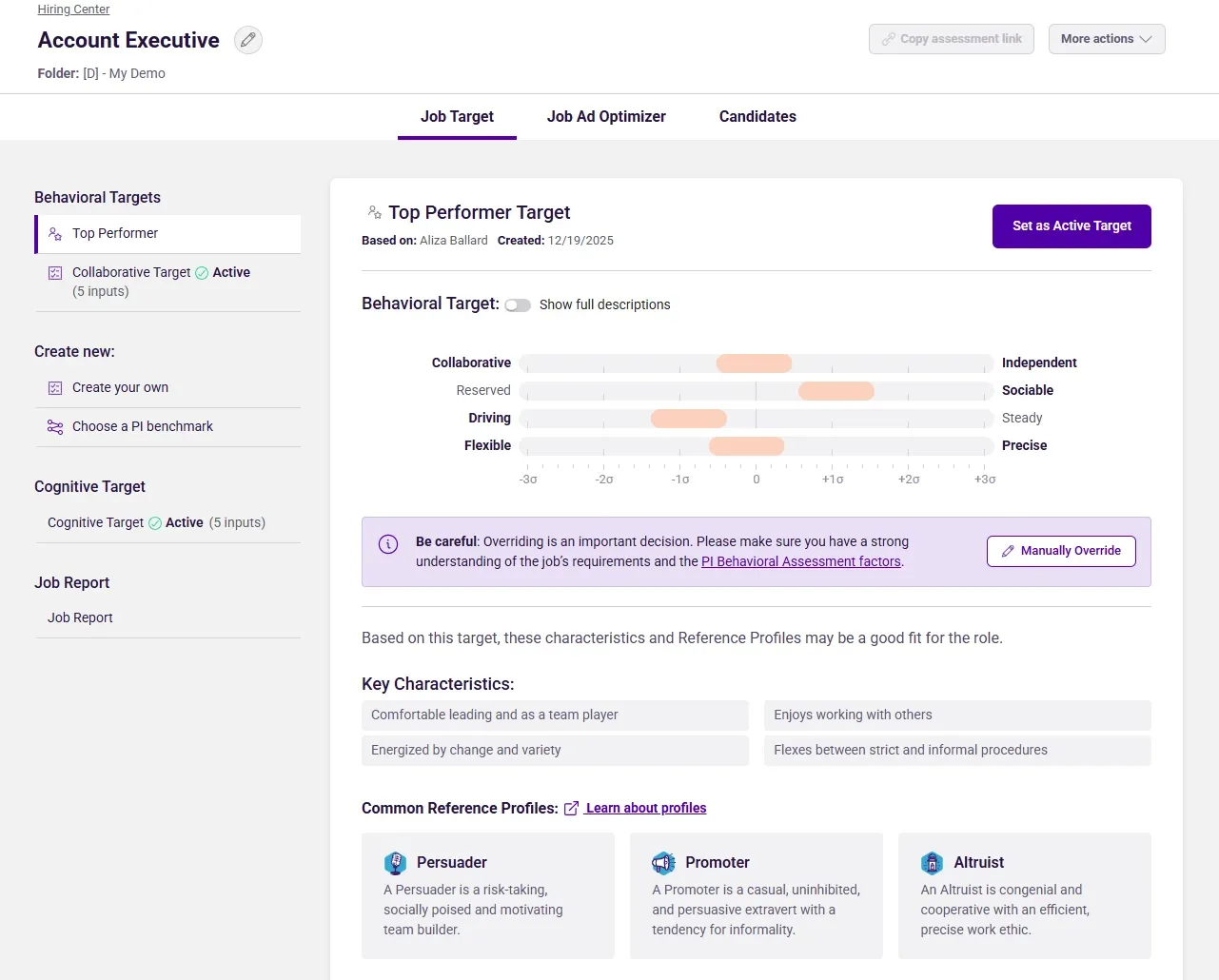
With PI Hire, you might identify that your best salespeople share a certain profile (say, high dominance, high extraversion, low patience – classic go-getter, loves variety and competition). When hiring new sales reps, you set that as a target. Suddenly, you're able to spot applicants who have the raw DNA of a star. Even if someone is a bit junior, if they have that innate drive and people orientation, you can train skills.
Conversely, someone may have a stellar sales résumé but a very different profile (imagine a very analytical, introverted person who succeeded in a highly inbound sales environment – but your sales roles are outbound and aggressive). PI Hire would flag that they don't fit your model, prompting you to scrutinize whether their success can translate. It doesn't mean you wouldn't hire them, but you'd know what challenges to expect or perhaps favor a different candidate who more naturally fits the role.
The result: better sales hires, who ramp up fast and stick around because they thrive in the role. (Some PI case studies have shown reduction in sales turnover and increases in sales performance after implementing a PI-driven hiring profile – exactly because of this alignment.)
Leadership Hires
For Leadership hires, cultural fit and cognitive ability to handle complexity are big concerns. PI Hire can be used to ensure a leader's behavioral profile will complement the team or fill a needed gap.
For instance, if you're hiring a CTO who needs to bring order to a chaotic engineering team, you'd want someone with a high formality (process-driven) but also enough extraversion to communicate cross-functionally. You can target that. Or if you need a visionary CMO to shake things up, you'd target a profile high in extraversion and low in formality (innovative, big-picture thinker).
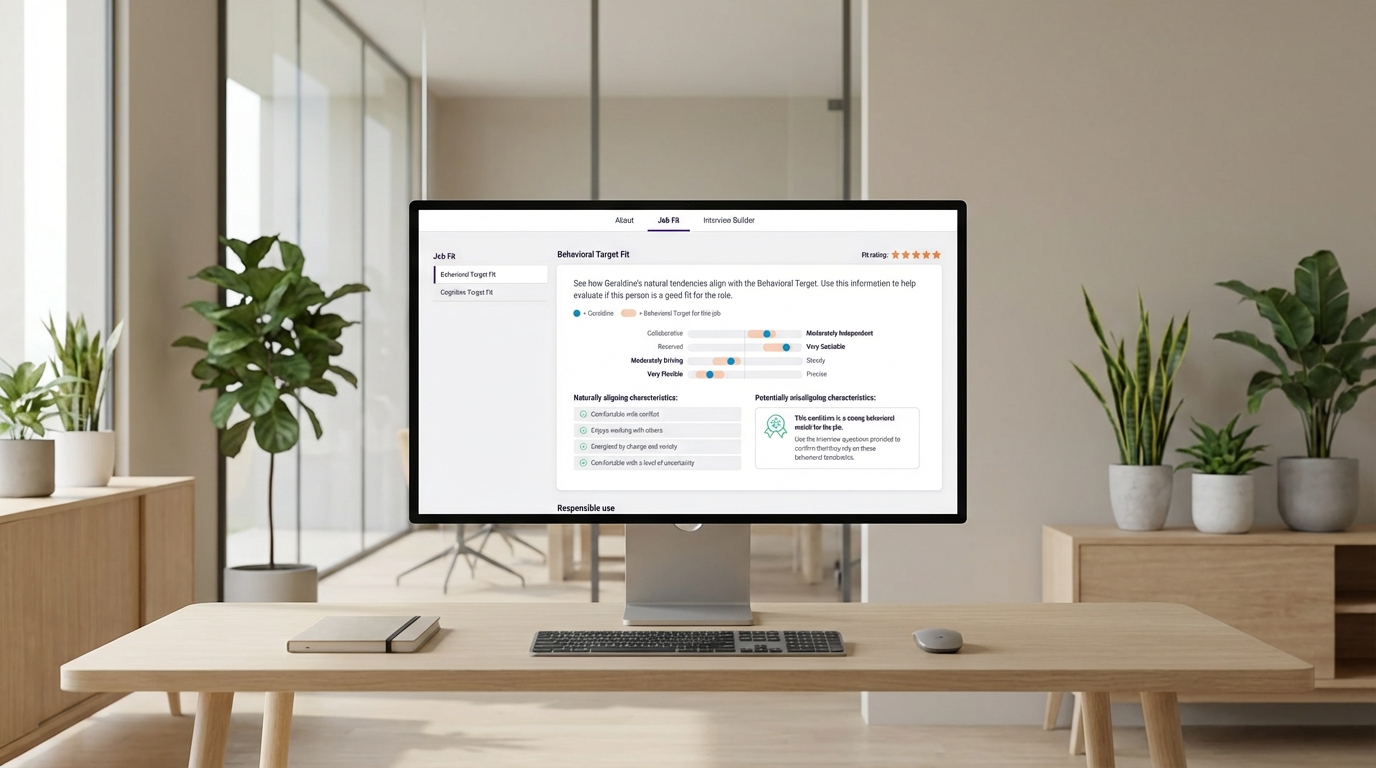
When candidates come in, their PI results will tell you if they naturally lean that way. Furthermore, cognitive assessment is often very relevant for executives (most are quick learners by necessity), and structured interviews help remove senior-level biases (like being swayed by someone's charisma or big-name past employer – the structured questions keep you comparing how they actually solve problems relevant to your business).
Many executive search firms use assessments for exactly these reasons – they know at that level, you need all the insight you can get because the stakes are so high.
Technical Roles
Engineers, Analysts
You might wonder how behavioral data plays in coding or highly technical jobs. It's true that hard skills and technical interviews are key here (PI Hire isn't replacing those), but understanding a technical candidate's behavioral profile can be very useful for team fit and future potential.
For example, you might have a team of brilliant engineers who are all very similar – perhaps all very high dominance, low patience (quick-moving, opinionated). Adding another of the same might cause clashes. You might purposely hire someone with a more collaborative, patient profile to balance the team (PI's Design tool could even help identify that need, but in hiring you could factor it in).
Or if you're hiring a data analyst who will need to present to stakeholders often, you'd look for a blend of analytical and communication-oriented traits (maybe medium extraversion, high formality).
The cognitive assessment is particularly relevant in tech – a high score might tell you a candidate without a fancy degree could be a whiz at learning new languages or systems, so you don't overlook them. Meanwhile, structured interviews for technical roles ensure you're not just evaluating coding ability but also problem-solving approach, dealing with ambiguity, etc., which the PI Interview Guide can incorporate alongside any coding tests you do.
Creative Roles
Even for creative positions (designers, writers), where portfolios are important, data can help. Creative teams often have distinct cultures; using PI Hire to match behavioral styles (e.g., a Marketing team might have a lot of high extraversion creatives who brainstorm together – adding someone extremely introverted might or might not work out without adaptation, depending on the environment).
There's no right or wrong profile, but consistency with the role's demands and team's style is what you're aiming for.
Campus or Entry-Level Hiring
If hiring people with little experience, how do you tell who will perform well? Their GPA or university might not predict job success. Here, assessments are a godsend. They reveal qualities in grads or early-career folks that you can't glean from a thin CV.
Many companies use behavioral and cognitive assessments in campus recruiting to identify high-potential talent in an objective way. It helps remove pedigree bias and can improve diversity too.
📊 Use Case Matrix: Recommended Rigor by Role Type
| Role Type | Rigor | Why |
|---|---|---|
| High-volume (Customer Service, Retail) | High | Consistency is paramount when hiring many people quickly; assessments filter efficiently and reduce early turnover. |
| Sales / Leadership | High | Cost of a bad hire is extremely high; behavioral alignment drives ramp-up speed and retention. |
| Technical (Engineers, Analysts) | Standard | Hard skills matter most, but behavioral data helps with team fit and future potential. |
| Creative (Designers, Writers) | Standard | Portfolios are primary, but matching behavioral style to team culture improves collaboration. |
| Campus / Entry-level | High | Little work history to evaluate; assessments reveal qualities you can't glean from a thin CV. |
| Low-stakes / Temporary | Light | Full battery may not be cost-effective; simplify or use selectively. |
When Might You Use a Lighter Touch?
Not every single hire needs the full battery. For example, if you're hiring a temporary intern or a very low-stakes role, you might not run a cognitive assessment each time or might simplify the process. Or if you have a role you've filled many times and have a huge pool of pre-assessed candidates (like a standing cabin crew hiring pipeline), you might only re-assess occasionally or use the tool selectively.
That said, PI Hire is scalable – it can be used for an intern or a CEO, just with perhaps different emphasis.
One Caution: Any Tool Is Only as Good as How You Use It
Data-driven hiring still requires thoughtful implementation. If you set a poor Job Target (e.g., asking for an unrealistically high cognitive score "just because"), you might filter out too many people and make it hard to fill the role.
PI Hire even has guidance and checks to avoid that – for instance, it might warn you if your target is very narrow or if stakeholders disagree (you can see variance in the job target creation). Adjust as needed, and remember it's okay to hire someone who isn't a 10/10 match if other factors make them a great pick – the tool is a compass, not an autocrat.
Real-World Example
Let's consider a case study: A mid-sized company had trouble hiring software sales reps who stayed longer than a year. They realized they were hiring people who looked good on paper (experience at big companies, etc.) but often lacked the intrinsic motivation or cultural fit for their fast-paced environment.
They implemented PI Hire. They set a job target for "Software Sales Rep" based on their top performers – which turned out to be a profile high in extraversion and dominance, relatively low patience (thrives with multitasking and urgency), and above-average cognitive (to grasp technical product details). They started assessing all sales candidates.
Immediately, they found that some candidates with mediocre résumés scored as excellent fits – they gave those folks a shot and some turned out to be stars (they had the drive and talent, just needed a chance). Meanwhile, a couple of flashy candidates scored poorly (one, for instance, had a very deliberate, methodical style – great for account management perhaps, but not for their hunter sales role; they passed on him despite an impressive background).
Result: their next cohort of sales hires ramped up to quota faster and the one-year retention jumped from 60% to 85%. Even better, sales performance overall improved because those who stayed were truly suited for the role and loved it. This hypothetical scenario mirrors many real outcomes companies have shared after introducing PI's data-driven approach.
In essence, data-driven hiring with PI Hire is versatile. It can be scaled for volume or dialled in for precision on key roles. It benefits any situation where hiring the right people matters (so, nearly everywhere), but the impact is most dramatic where the pain of bad hires or the challenge of finding good fits is greatest – high turnover jobs, mission-critical roles, or scenarios requiring quick scaling. It's in those moments you'll really appreciate the power of having solid data to guide your people decisions.
Conclusion: Ready to See PI Hire in Action?
Data-driven hiring with PI Hire is not "more process for process' sake." It is a practical way to improve consistency, reduce avoidable turnover, and make better decisions faster—especially when hiring volume is high, the cost of a mis-hire is significant, or role fit is difficult to judge from a CV alone.
The key is scalable rigor: apply the right level of assessment and structure for the risk and complexity of the role, set realistic job targets, and use the data as a decision compass—not a rigid gatekeeper. When implemented thoughtfully, PI Hire helps organizations hire with clarity, fairness, and repeatable outcomes—so teams grow with the right people, not just available people.
If you want to see what this looks like in your environment, book a PI Hire demo. We'll walk through how to set job targets, interpret candidate fit, and build a structured workflow aligned to your roles—so you can reduce hiring risk and improve results with a process your managers will actually use.
Written by

Founder & Principal Consultant
MSc in I/O Psychology, 13+ years in leadership roles with A.P. Moller Group, now advising global organizations on talent strategy.
Progressica is a global talent assessment provider delivering scientifically validated talent assessments and hiring assessments to organizations worldwide. As the licensed partner of The Predictive Index®, a global leader in talent optimization, Progressica enables businesses to make data-driven hiring decisions, improve workforce performance, and align people strategy with business goals. We provide talent assessment solutions to clients across Malta, Italy, the Netherlands, Germany, Belgium, Latvia, Lithuania, Estonia, Saudi Arabia, the UAE, Singapore, Indonesia, Malaysia, Pakistan, and other international markets, supporting effective recruitment, leadership development, and long-term talent optimization.